If you picture single-family living in Middlesex County as one simple experience, you will probably be surprised once you start looking. This county covers a wide range of housing styles, lot sizes, and day-to-day lifestyles, from compact urban streets in Cambridge to classic inner-suburban neighborhoods in Newton to more spacious outer-county settings like Concord and Westford. If you are trying to decide whether Middlesex County fits your goals, this guide will help you understand what you are really getting for the price. Let’s dive in.
Middlesex County Means Different Lifestyles
Single-family living in Middlesex County is not one-size-fits-all. The county had an estimated population of 1,669,979 in 2025, with about 1,995.5 people per square mile, which tells you right away this is a dense and active place compared with many nearby markets.
It is also a high-cost county. Census data shows a median owner-occupied home value of $727,800, a 61.3% owner-occupied housing rate, a median household income of $130,847, and a mean commute of 29.9 minutes. In practical terms, you are often paying for access, convenience, and established neighborhoods as much as you are paying for the house itself.
That matters because buyers often assume single-family means the same thing everywhere. In Middlesex County, the experience changes a lot depending on where you land on the map.
What Single-Family Homes Look Like
Cambridge feels urban and compact
In Cambridge, single-family living usually comes with smaller lots and older neighborhood patterns. City planning materials describe a mix of single-family homes, two-family homes, three-deckers, apartments, and townhouses, often on lots around 50 feet wide by 100 feet deep.
That means Cambridge is rarely about getting a big backyard. Instead, the appeal is usually tied to walkability, older housing stock, and close access to transit and daily amenities.
Newton feels like a classic inner suburb
Newton is a strong example of traditional inner-suburban single-family living. Official city materials describe areas like Newtonville as having large detached houses originally built as single-family homes on moderate-sized lots, with styles such as Queen Anne and Colonial Revival.
Newton zoning also shows detached single-family districts commonly requiring 7,000, 10,000, or 15,000 square feet of lot area depending on the district. So while Newton often feels roomier and more residential than Cambridge, it is still generally more established and compact than farther-west suburbs.
Framingham offers variety in the middle
Framingham sits in a middle ground. Its single-family housing stock is more varied in style, with examples including gambrels, bungalows, ranches, and cape-style homes.
That variety gives buyers more range in what they may find. Framingham also functions as a regional retail center, which adds another layer of convenience to everyday living.
Concord and Westford feel more spacious
As you move farther west in Middlesex County, single-family living often starts to feel more open and lower density. Concord zoning allows minimum lot areas ranging from 10,000 square feet to 80,000 square feet depending on the district, which is a major shift from the tighter patterns you see closer to Boston.
Westford preservation materials also show a broad mix of home styles, including Colonial, Colonial Revival, Bungalow, Cape Cod, Federal, and Victorian Eclectic. In plain terms, outer Middlesex County can offer a more spacious, wooded, and semi-rural feel.
What House Styles You Will See
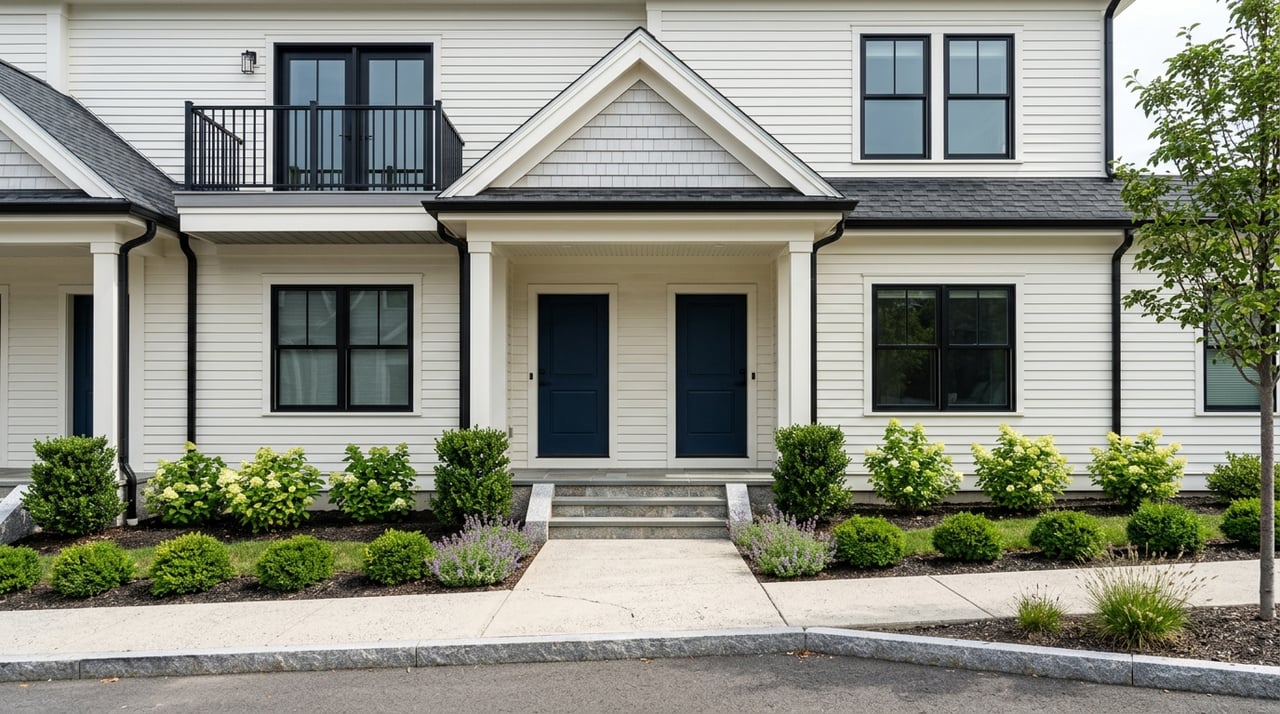
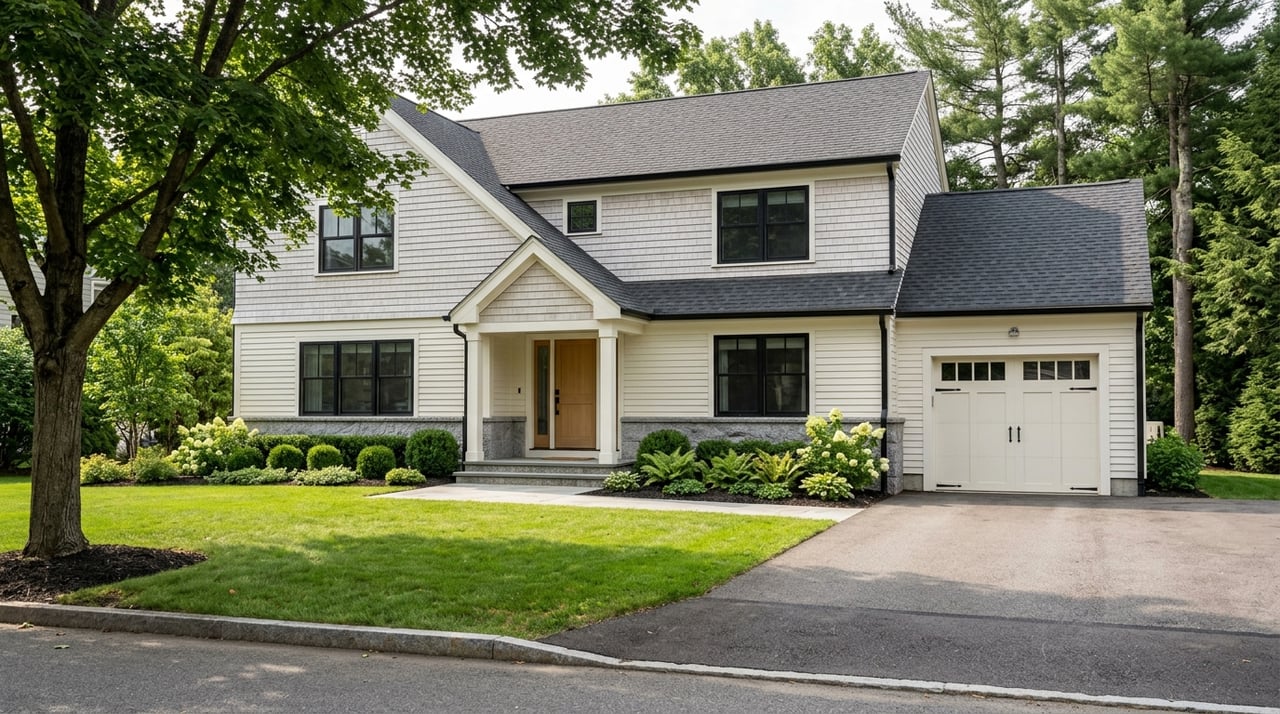
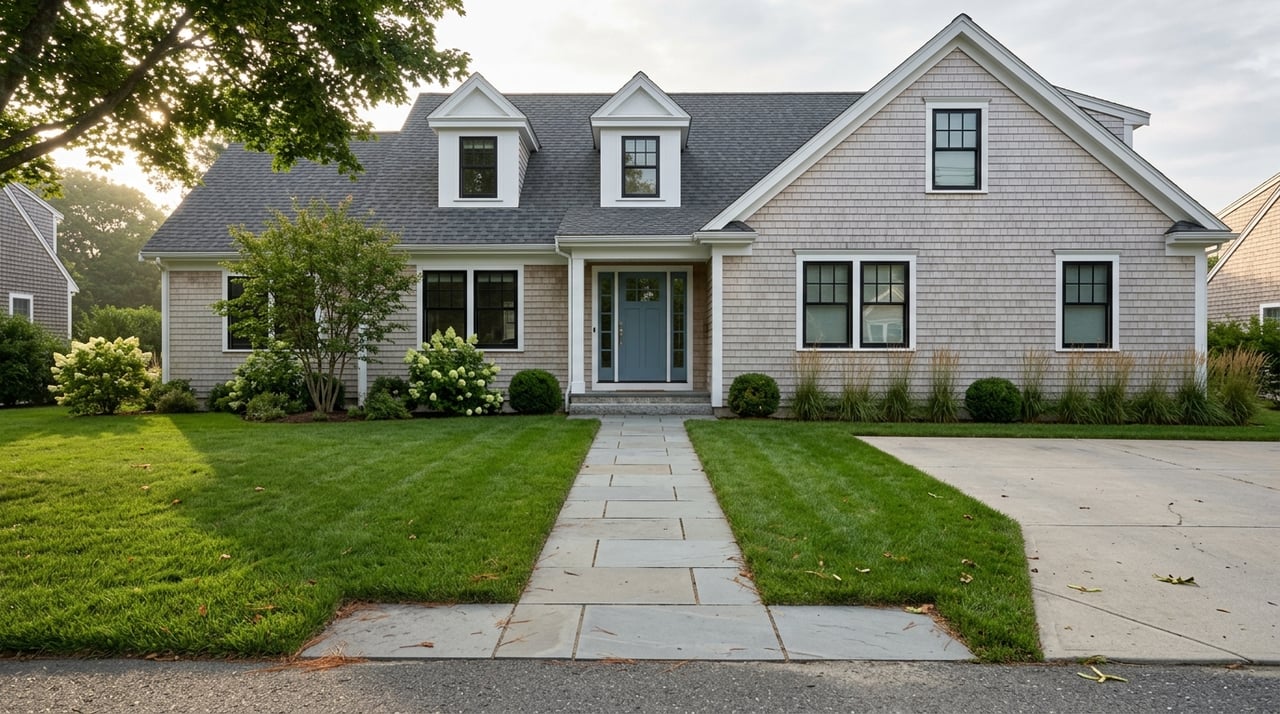
Across Middlesex County, you are likely to see a broad mix of older and established home styles rather than one dominant look. A practical style checklist includes:
- Colonial
- Colonial Revival
- Cape Cod
- Ranch
- Dutch Colonial
- Queen Anne
- Shingle
- Gambrel
- Bungalow
- Victorian Eclectic
For buyers, that means your search may be less about chasing one exact style and more about deciding which setting fits your lifestyle best.
Yard Space Depends on the Town
One of the biggest questions buyers ask is how much outdoor space they will really get. In Middlesex County, that answer depends heavily on location.
In Cambridge, lot patterns are often small. In Newton, single-family districts commonly require lot sizes from 7,000 to 15,000 square feet. In Concord, lot minimums range from 10,000 to 80,000 square feet, which can create a much more spacious feel.
If yard space is high on your list, you will want to compare towns carefully. The county gives you options, but those options come with very different tradeoffs.
Commute Style Matters as Much as Commute Time
Middlesex County’s mean commute is 29.9 minutes, but the bigger story is how you get around. The county offers very different daily rhythms depending on which community you choose.
Cambridge supports transit-first living
Cambridge is the most transit-rich part of this comparison. The city says most neighborhoods are within a short walk of public transit, with six rapid-transit subway stations, commuter rail access, 31 MBTA bus routes, private shuttles, and bike share.
If you want a lifestyle where driving is optional more often, Cambridge stands out.
Newton offers a hybrid commute
Newton blends suburban single-family living with multiple transportation options. The city points to Green Line subway service, commuter rail stations, major routes including I-90, I-95, Route 9, Route 16, and Route 30, plus more than 20 miles of bike lanes and paths.
That mix gives many buyers a middle-ground option. You can have a more traditional detached-home setting without giving up access to transit and regional connections.
Framingham and outer towns lean more car-oriented
Framingham has commuter rail service on the MBTA Framingham/Worcester Line, along with more limited regional bus service. Farther out, many towns lean more toward driving as part of daily life, with rail serving as an extra option rather than the main one.
So the real question is not just how long your commute may be. It is whether you want your daily routine to be transit-first, car-light, or mostly car-based.
Daily Convenience Is a Real Advantage
A big reason buyers choose Middlesex County is the depth of day-to-day convenience. Census data counts 44,624 employer establishments and $31.4 billion in retail sales countywide, which supports a strong local base for work, errands, dining, and shopping.
That helps explain why the county often feels more self-contained than a pure bedroom community. Many towns and cities here offer local services and commercial areas that support everyday needs close to home.
Newton highlights its walkable village centers and commercial corridors rather than a single downtown. Cambridge and Framingham each bring their own neighborhood or regional retail patterns. For you as a buyer, that can mean shorter errand runs and more choices close by.
Recreation Adds to the Lifestyle
Single-family living here is not only about the house and the commute. Access to outdoor space is another major part of the appeal.
The Charles River Reservation spans 20 miles and includes bike paths, boating, playgrounds, and athletic fields. The Upper Charles River Reservation runs through Watertown, Waltham, Newton, and Weston. Middlesex Fells Reservation offers hiking, biking, fishing, and boating on Spot Pond.
You also have Fresh Pond Reservation in Cambridge, with 162 acres of open space around the city reservoir, and Walden Pond State Reservation in Concord. This mix gives Middlesex County a strong blend of urban convenience and outdoor access.
How Middlesex Compares With Southern New Hampshire
For many buyers in this region, the real comparison is not just town versus town. It is Middlesex County versus Southern New Hampshire.
That comparison usually comes down to cost, density, and lifestyle. Middlesex County’s median owner-occupied home value is $727,800. By comparison, Rockingham County, New Hampshire is at $497,500, and Hillsborough County is at $421,100.
Density also looks very different. Middlesex County has about 1,995.5 people per square mile, while Rockingham County has 451.8 and Hillsborough County has 482.5. So when you choose Middlesex County, you are usually choosing stronger access, more transit options, and a more connected day-to-day experience, but often with a higher price and less space.
What Single-Family Living Really Offers
At its core, single-family living in Middlesex County offers a blend that can be hard to find elsewhere. You can get a detached home in an established New England setting while staying connected to jobs, shopping, recreation, and in many areas, transit.
The tradeoff is pretty clear. You are often paying more for older housing stock, smaller lots in some towns, and a denser environment than you would find in places farther north.
If you value convenience, access, and neighborhood character, Middlesex County can make a lot of sense. If your top priority is maximizing yard size or lowering price, outer parts of the county or nearby Southern New Hampshire may be worth a closer look.
A smart move is to compare towns based on how you actually want to live. The right fit is not just about bedrooms or square footage. It is about commute style, lot size, nearby amenities, and how you want your everyday routine to feel.
If you want help sorting through those tradeoffs in Northern Massachusetts or nearby Southern New Hampshire, Kyle Waszeciak can help you build a clear plan and make a smart move.
FAQs
What does single-family living in Middlesex County usually cost?
- Census data shows a median owner-occupied home value of $727,800 in Middlesex County, which is higher than nearby Southern New Hampshire counties referenced in this guide.
What is yard space like for single-family homes in Middlesex County?
- It varies a lot by town, with smaller lot patterns in Cambridge, common single-family lot requirements of 7,000 to 15,000 square feet in Newton, and much larger zoning minimums in parts of Concord.
Can you live in Middlesex County without driving every day?
- In some communities, yes. Cambridge is the most transit-rich, Newton offers a mix of transit and road access, and Framingham and many outer towns lean more toward driving with rail as an added option.
What home styles are common in Middlesex County single-family housing?
- Common styles across the county include Colonial, Colonial Revival, Cape Cod, Ranch, Dutch Colonial, Queen Anne, Shingle, Gambrel, Bungalow, and Victorian Eclectic.
How does Middlesex County compare with Southern New Hampshire for buyers?
- Middlesex County is generally denser and more expensive, but it often offers stronger access to jobs, transit, shopping, and recreation than more car-centered Southern New Hampshire areas.