If Essex County prices make homeownership feel out of reach, house hacking may be one of the few strategies that can change the math. Instead of buying a single-unit home and carrying the full payment alone, you live in one unit of a small multifamily and rent out the others. In a competitive county where home values are high and rental demand is strong, that approach can lower your monthly housing cost while helping you build equity over time. Let’s dive in.
Why House Hacking Fits Essex County
Essex County is not a cheap market, and that is exactly why buyers keep looking for smarter ways to get in. Census data for 2019 through 2023 shows a median owner-occupied home value of $584,000 and median gross rent of $1,673, while Zillow’s March 2026 data shows a typical home value of $716,686, average asking rent of $2,547, median days to pending of 13, and 40.1% of sales closing over list price.
Those numbers tell a clear story. Buying here is competitive, but rental demand is also meaningful. That makes owner-occupied multifamily purchases worth a serious look, especially if your goal is to reduce your own housing expense instead of chasing instant cash flow.
Massachusetts also recognizes the resident-landlord model as a real path to housing stability and long-term wealth creation. The state specifically describes owners who live in one unit of a two-family or three-decker and rent the others. In a market like Essex County, that framework is practical, not theoretical.
What House Hacking Usually Looks Like
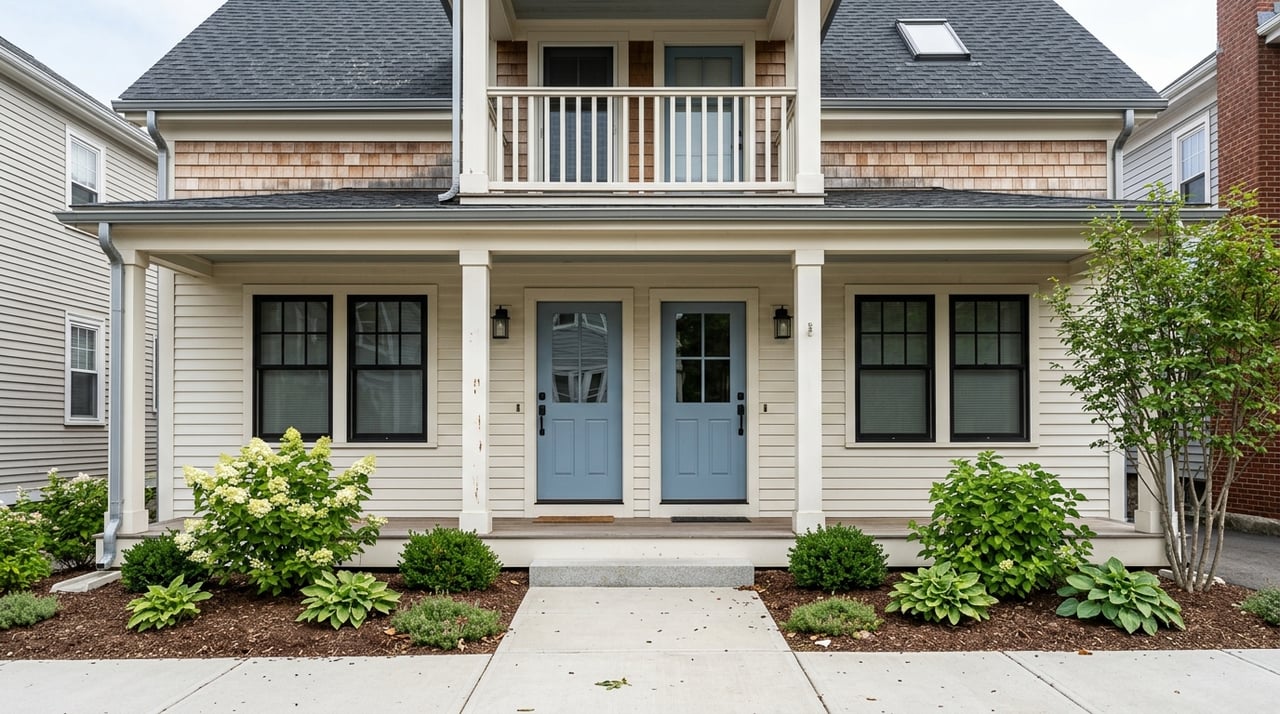
In Essex County, house hacking most often means buying a small multifamily property with two to four units. That could be a two-family, three-family, triple-decker, or a small four-family building where you occupy one unit as your primary residence.
The biggest upside is simple. Rent from the other unit or units may help offset part of your mortgage and ownership costs. The tradeoff is that you are not just buying a home, you are also taking on the responsibilities that come with owning an income-producing property.
This is why strategy matters. You want a property that works as both a place to live and a realistic long-term asset, not just a listing that looks good at first glance.
Where Small Multifamily Homes Show Up
Small multifamily housing is not spread evenly across Massachusetts. State housing guidance says urban municipalities tend to have a more balanced mix of single-family homes and smaller multifamily buildings, while many suburbs remain heavily single-family with fewer two- to four-unit options.
In Essex County, that means your search often makes more sense in older, denser communities where this housing stock already exists. The North Shore coastal belt includes places such as Beverly, Gloucester, Lynn, Newburyport, Peabody, Salem, and Swampscott, which are the types of communities where small multifamily homes are more likely to appear.
That does not mean every listing in those areas is a good fit. It means your odds improve when you focus on locations with the right housing mix, steady tenant demand, and a layout that works for owner-occupant living.
Transit and supply matter
Massachusetts notes that zoning has historically constrained multifamily production. The state also says MBTA communities must now zone for multifamily housing as of right, which may expand supply over time in transit-served parts of Essex County.
For you as a buyer, that matters in two ways. First, current small multifamily inventory can still be limited. Second, long-term supply changes may slowly create more options near transit, which can influence both competition and future value.
Older Properties Need a Sharper Eye
Many of the multifamily homes that fit a house-hack strategy are older. Salem’s housing roadmap says about half of the city’s homes were built before 1939, and Massachusetts health guidance warns that many homes built before 1978 may contain lead paint.
That does not make older multifamily homes a bad idea. It just means you need to underwrite more than the rent. Condition, repairs, deferred maintenance, and lead-related costs can change the deal fast.
When you review a property, pay close attention to:
- Roof, siding, windows, and foundation condition
- Heating systems and electrical updates
- Plumbing age and water damage history
- Unit layout and overall livability
- Lead paint risk in pre-1978 homes
- Near-term repair needs versus your available cash
A strong house hack is not only about what the property earns. It is also about what it will cost you to stabilize and maintain.
Financing Options to Know
One reason house hacking stays attractive is that owner-occupants often have access to financing options that are more flexible than those for non-owner investors. In Essex County, several paths may be worth exploring based on the research provided.
FHA loans
HUD says FHA financing is available for one- to four-unit properties, with down payments as low as 3.5%. For many buyers, this is the first program they look at because it lowers the upfront cash hurdle.
Conventional low-down-payment options
Freddie Mac offers mortgages for owner-occupied two- to four-unit primary residences, and its Home Possible option allows a down payment as low as 3% on one- to four-unit homes. Fannie Mae HomeReady also allows a 3% borrower contribution on two- to four-unit principal residences and permits rental income from the property to be used in qualifying.
MassHousing programs
MassHousing offers mortgages for single-family homes, condos, and two- to four-family properties. It also offers up to $25,000 in statewide down payment assistance for income-eligible first-time buyers, and up to $30,000 for households at or below 60% of area median income. In Eastern Massachusetts, including Essex County, the listed down payment assistance income cap is $205,335, and that assistance is available only with a MassHousing first mortgage.
MassHousing also requires homebuyer counseling for first-time buyers and landlord counseling before closing on a two- to four-family purchase. If the property needs work, MassHousing offers purchase-and-renovation financing as well.
Loan Limits in Essex County
Before you fall in love with a property, make sure the price lines up with current conforming loan limits. For 2026 in Essex County, the limits are:
- 1-unit: $962,550
- 2-unit: $1,232,250
- 3-unit: $1,489,500
- 4-unit: $1,851,100
This matters because financing structure affects both your monthly payment and your cash needed to close. If you are targeting a two- to four-unit property, these higher multifamily limits can keep more options in play.
Running the Numbers Realistically
This is where house hacking gets exciting and where buyers can also get themselves in trouble. The right question is not, “Can I buy this?” The better question is, “Does this still work after I use realistic numbers?”
Using Zillow’s March 2026 Essex County median sale price of $609,667, a purchase with 3.5% down would mean roughly $21,338 down and a loan amount near $588,329. At Freddie Mac’s May 7, 2026 average 30-year fixed rate of 6.37%, principal and interest would be about $4,119 per month before taxes, insurance, repairs, vacancy, and reserves.
Now compare that with Zillow’s March 2026 Essex County average rent of $2,547. Two rented units at that average would produce about $5,094 in gross monthly rent before any vacancy or operating expenses. On paper, that can look workable, but the margin may still be thin once you add the real costs of ownership.
That is why conservative underwriting matters. Fannie Mae notes that when projected rent is used to qualify, lenders commonly count 75% of gross rent to allow for vacancy and maintenance. Whether you are qualifying with a lender or analyzing the deal for yourself, that haircut is a useful reality check.
Numbers to review on every deal
Before making an offer, gather these figures for the specific property:
- Purchase price compared with Essex County loan limits
- Full monthly payment, not just principal and interest
- Realistic market rent for each unit
- Rent after a 75% underwriting haircut if applicable
- Property taxes and insurance
- Maintenance and repair expectations
- Vacancy assumptions
- Capital expenditure reserves
- Cash needed for improvements or lead-related work
- Required post-closing reserves
MassHousing notes that six months of reserves are often required on multifamily files. Even when a program does not require that much, keeping a solid liquidity buffer is smart.
What Success Usually Looks Like
In Essex County, the strongest house-hack deals are often not the ones that promise huge short-term cash flow. They are the ones that help you lower your housing cost, lock in ownership, and build equity while the other units help carry the load.
That distinction matters. In a high-cost market with strong demand, the resident-landlord model is often more about reducing your personal expense and creating long-term financial progress than producing immediate monthly profit.
If you approach the purchase with clear expectations, conservative numbers, and a solid repair plan, house hacking can still be a very practical move here. The key is buying for both lifestyle fit and financial durability.
A Smart Buying Strategy
If you are serious about house hacking in Essex County, keep your plan simple and disciplined:
- Focus on two- to four-unit properties in areas where this housing stock is more common.
- Prioritize layout, condition, and rentability over cosmetic appeal.
- Review financing options early, including owner-occupant programs and MassHousing eligibility.
- Underwrite rent conservatively and budget for repairs, vacancy, and reserves.
- Treat older-home issues like lead paint and deferred maintenance as core deal terms, not side notes.
This is where an analytical approach helps. You do not need a perfect building. You need a property that works on paper, works for your lifestyle, and still makes sense after the easy assumptions are stripped away.
If you want help evaluating whether a multifamily purchase fits your goals in Northern Massachusetts, Kyle Waszeciak can help you think through the numbers, tradeoffs, and next steps with a practical strategy-first approach.
FAQs
What is house hacking with an Essex County multifamily home?
- House hacking in Essex County usually means buying a two- to four-unit property, living in one unit as your primary residence, and renting out the other unit or units to help offset your housing costs.
What types of properties work best for house hacking in Essex County?
- The most common options are small multifamily homes such as two-families, three-families, triple-deckers, and four-family properties, especially in older and denser parts of the county.
What down payment options are available for Essex County house hackers?
- Based on the research provided, FHA may allow as little as 3.5% down on one- to four-unit homes, while Freddie Mac Home Possible and Fannie Mae HomeReady may allow 3% down on eligible owner-occupied two- to four-unit purchases.
Can rental income help you qualify for an Essex County multifamily mortgage?
- Yes, some loan programs allow rental income from a two- to four-unit owner-occupied property to be used in qualifying, and lenders commonly count 75% of gross rent to account for vacancy and maintenance.
Are older multifamily homes in Essex County riskier to buy?
- Older homes can still be strong opportunities, but they often require closer review for repairs, deferred maintenance, and possible lead paint issues in homes built before 1978.
Is house hacking in Essex County more about cash flow or lowering your housing cost?
- In this market, it is often more about reducing your monthly housing expense and building equity over time than creating large immediate cash flow.